


Less than one year ago, we published an article titled:
“Say Goodbye to Range Anxiety — The 1000km EV Range Era Is Here.”
At the time, many people thought 1,000km electric vehicles sounded futuristic.
Today, the future has arrived faster than anyone expected.
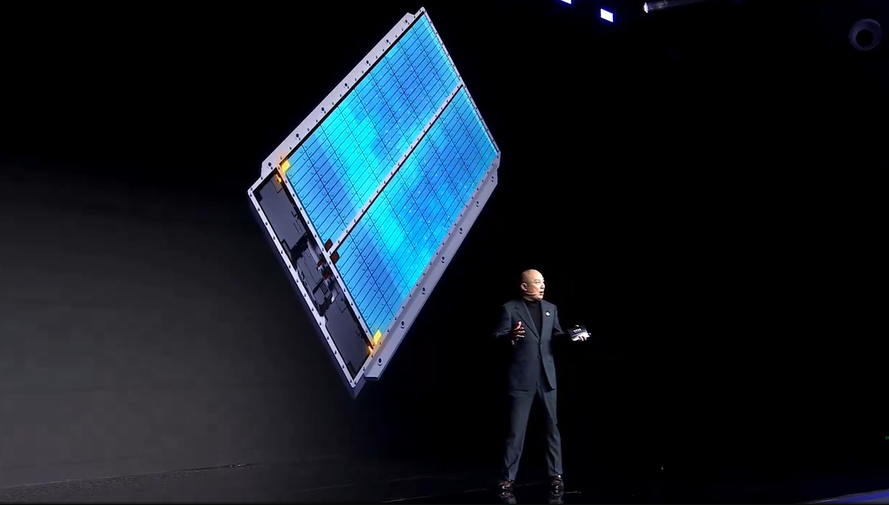
Global battery leader CATL has unveiled a new generation of EV batteries capable of up to 1,500km driving range, along with ultra-fast charging technology that can recharge an EV in roughly six minutes.
The question is no longer if EVs can replace petrol and diesel cars. That debate is over.
The real question now is:
Is this the beginning of the end for the combustion engine?
 From 1000km to 1500km — One Year Changed Everything
When long-range EVs first crossed the 1,000km threshold, range anxiety effectively disappeared for most drivers.
Now CATL’s newest Condensed Battery pushes that boundary even further:
- Up to 1,500km range for large sedans
- Over 1,000km range even for SUVs
- Energy density reaching 350 Wh/kg, a new benchmark for mass-production batteries
To put this into perspective:
👉 Brisbane → Sydney (~920km)
👉 Sydney → Melbourne (~880km)
👉 Melbourne → Adelaide (~730km)
For the first time, a single EV charge can realistically cover Australia's busiest intercity routes — journeys once dominated by petrol & diesel vehicles.
For everyday Australian drivers, charging may soon become a weekly habit, not a daily concern.

The Real Breakthrough: Charging Speed
Range alone does not kill combustion engines.
Charging time does.
CATL also introduced its third-generation Shenxing battery capable of charging from near empty to almost full in about 6 minutes, bringing EV refueling times closer than ever to petrol stops .
This changes the psychological equation:
| Old EV Concern | 2026 Reality |
|---|---|
| “Charging takes too long” | Minutes, not hours |
| “EVs can’t travel far” | 1,500km capability |
| “Petrol is more convenient” | Advantage disappearing |
The traditional strengths of internal combustion vehicles are rapidly shrinking.

What Australian EV Owners Should Expect Next
Over the next 3–5 years, Australian drivers will likely see:
✅ 800–1,000km EVs becoming mainstream
✅ Faster highway charging networks
✅ Fleets electrifying rapidly
✅ Electricity replacing fuel as a daily habit
The shift will not happen overnight — but the direction is now irreversible.
Home Charging Becomes Even More Important
When range exceeds daily driving needs, home chargers become the primary energy source — not public stations. Drivers prefer:
- Slow overnight charging
- Cheaper electricity
- Solar & home battery integration
The iEV 22kW Wall Charger is designed for this future of EV ownership:
- ⚡ Fast AC charging works with both single-phase and three-phase installations
- 🔌 Universal compatibility with most EVs and plug-in hybrid cars sold in Australia
- 🏠 Ideal for homes, apartments, and small businesses
- 👷 Trusted by Australian electricians for safe & simple installation

So… Is This the End of the Combustion Engine?
Not overnight — but the tipping point is arriving faster than most expected.
For over a century, petrol and diesel vehicles dominated because they offered three decisive advantages:
- Long driving range
- Instant refueling
- Established nationwide infrastructure
When electric cars can travel as far and recharge nearly as fast as petrol/diesel vehicles, the combustion engine loses its strongest argument.
Rather than a sudden disruption, we are witnessing a gradual but irreversible transition:
The combustion engine is not disappearing — it’s being quietly replaced.
At iEV, we’re passionate about supporting Australia’s transition to electric mobility. Stay tuned for more insights, product updates, and practical tips to make EV ownership easier, greener, and better every day.

Share:
BYD EV AC Charging Comparison Australia 2026 – Which Model Charges Fastest at Home?
Beijing Auto Show 2026: Why Global Automakers Are Turning Toward China