


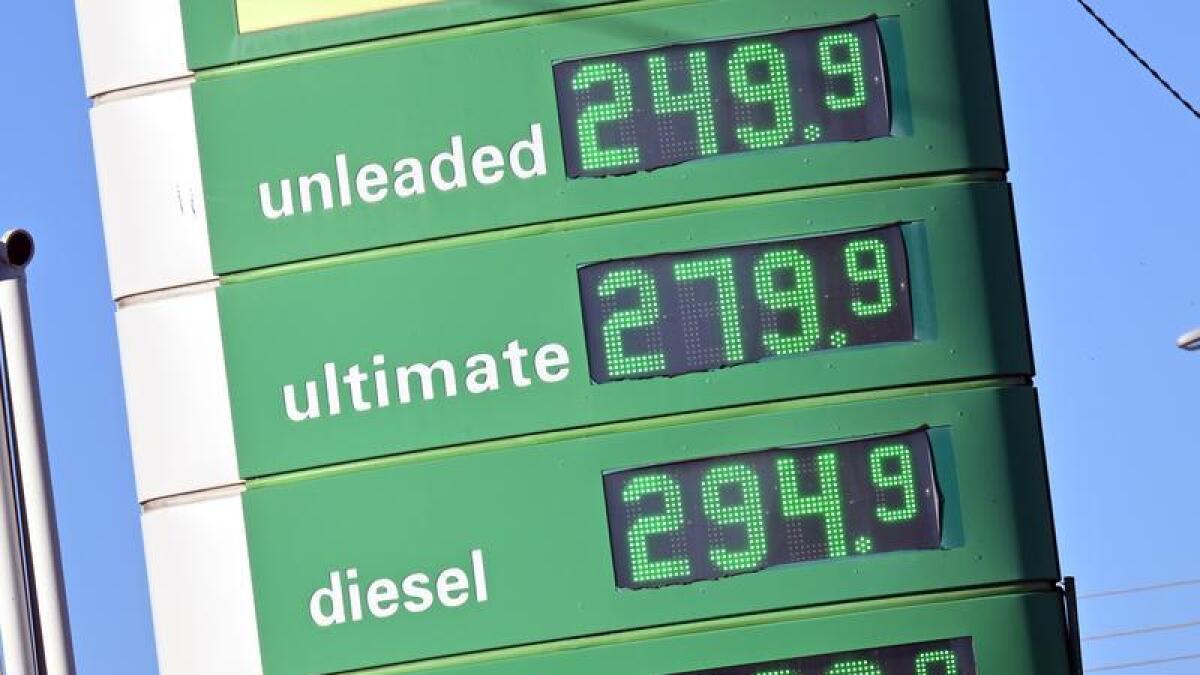
March 21, 2026 – If you've filled up your tank recently, you've likely felt the sting: national average unleaded petrol prices are hovering around $2.3–$2.5 per litre, with many capital cities pushing $2.4–$2.6 and some regional spots even higher. Just weeks ago, averages sat closer to $1.57–$1.80. That's a jump of 30–60 cents per litre in a very short time, adding $20–$40 extra to a typical 50–60 litre fill-up.
The trigger? The escalating US-Israel conflict with Iran, which began with strikes in late February 2026. Iran’s retaliatory actions disrupted key oil infrastructure and shipping through the Strait of Hormuz – the chokepoint for roughly 20% of global seaborne oil. Brent crude surged from the low $70s to peaks near $100–$110 (with settlements in the high $90s recently), creating one of the sharpest oil price shocks in years.
Australia imports most of its refined fuel, so global disruptions hit our bowser fast. The ACCC's weekly monitoring shows wholesale petrol prices rose ~40–42 cpl and retail ~48–59 cpl across major cities from late February to mid-March. Diesel increases were even steeper in many cases. While prices have moderated slightly in the past week, they remain elevated, with experts warning volatility could persist if tensions continue.
Why This Petrol Pain Is Accelerating the Shift to Electric Vehicles
Here’s the silver lining for Australian drivers: sustained high petrol prices are making EVs far more attractive economically – and fast.
Charging an EV at home (especially with solar) typically costs just one-third to one-quarter what you pay for petrol per kilometre. When petrol rises 30–50 cents and stays there, the payback period on an EV shortens dramatically.
Recent indicators show the momentum building:
- Surveys (including from Primara Research and others) reveal interest in EVs has surged: the share of drivers seriously considering an electric vehicle jumped from around 7% pre-conflict to 25% now, with up to 39% planning an EV or hybrid for their next purchase.
- Modelling from charging experts suggests a prolonged 30–50 cent petrol increase could lift EV sales by an extra 10% during the price shock period.
- Scandinavian data (often referenced by the Electric Vehicle Council) links every 1% petrol price rise to ~0.85% higher EV uptake – and Australia is responding similarly.
- New-car EV market share hit a record ~12% in February 2026, even before the latest spike fully hit wallets.
Models like the BYD Atto 3, Geely EX5, and Zeekr 7X are seeing strong demand, especially among urban and fringe buyers with long commutes and rooftop solar – where low running costs deliver the biggest wins.
Beyond savings, switching helps Australia reduce reliance on imported oil. Replacing just one million petrol cars with EVs could cut fuel imports by over one billion litres annually, shielding households and the economy from future geopolitical shocks.
iEV Chargers: Your Reliable Partner for Easy, Affordable Home Charging
As the owner of iEV Chargers & Accessories (www.i-ev.com.au), I've seen this shift firsthand. More Aussies are realising that reliable home charging is the key to unlocking EV ownership's full benefits – convenience, cost savings, and energy independence.
At iEV, we specialise in high-quality, Australian-focused EV charging solutions:
- Portable EV Chargers – Lightweight, compact, and perfect for home, work, or travel, with built-in safety features and broad vehicle compatibility.
- Wall-Mounted Chargers – Including powerful 3-phase 22kW options for faster home charging, designed, tested, and certified for reliability.
- EV Charging Cables and Accessories – Durable, efficient add-ons to make your setup seamless.
Whether you're new to EVs or upgrading your setup, our products deliver safe, efficient charging that maximises your savings – especially now, when every avoided petrol litre counts.
The Bigger Picture for Australia
This conflict has brutally highlighted our vulnerability to imported fuel while we sit on world-class renewables and critical minerals. High petrol is doing what policy incentives alone couldn't fully achieve: making the switch to electric vehicles a clear, market-driven choice for thousands more households.
If you're feeling the pinch at the pump, 2026 could be the year you finally go electric. With falling battery prices, better ranges, expanding public networks, and now unbeatable running-cost maths, the case has never been stronger.
Ready to ditch the bowser for good? Visit www.i-ev.com.au to explore our range of chargers and accessories. Power your EV journey with confidence – and turn today's fuel frustration into tomorrow's energy freedom.
Drive less petrol, charge smarter, and let's build a more resilient Australia together.
Share:
What Is BYD’s Megawatt Flash Charging?
Top Five Recommended EV Wall Chargers in Australia (2026 Guide)