


One of my Aussie friends in Brisbane is in his 40s. His parents started driving Mazda back in the 1980s, and ever since then, the family has only owned Mazdas. From the classic Mazda 323 to the Mazda 2 hatchback, Mazda 6 sedan and CX-9 family SUV, it became more than just transportation — it became a family tradition.
And honestly, that story is not unusual in Australia.
Mazda has built one of the strongest brand loyalties in the country. For years, Australia has been one of Mazda’s best global markets, with the brand consistently ranking among the top-selling automotive companies nationwide. Aussies love Mazda for its reliability, driving feel, stylish design, and value. (And yes, the free snacks and drinks bar at its service centres also counts)
But the automotive world is changing rapidly.
The EV era is here, and brands that dominated the petrol age are now facing an entirely new challenge: software, batteries, charging ecosystems, and Chinese EV competition.
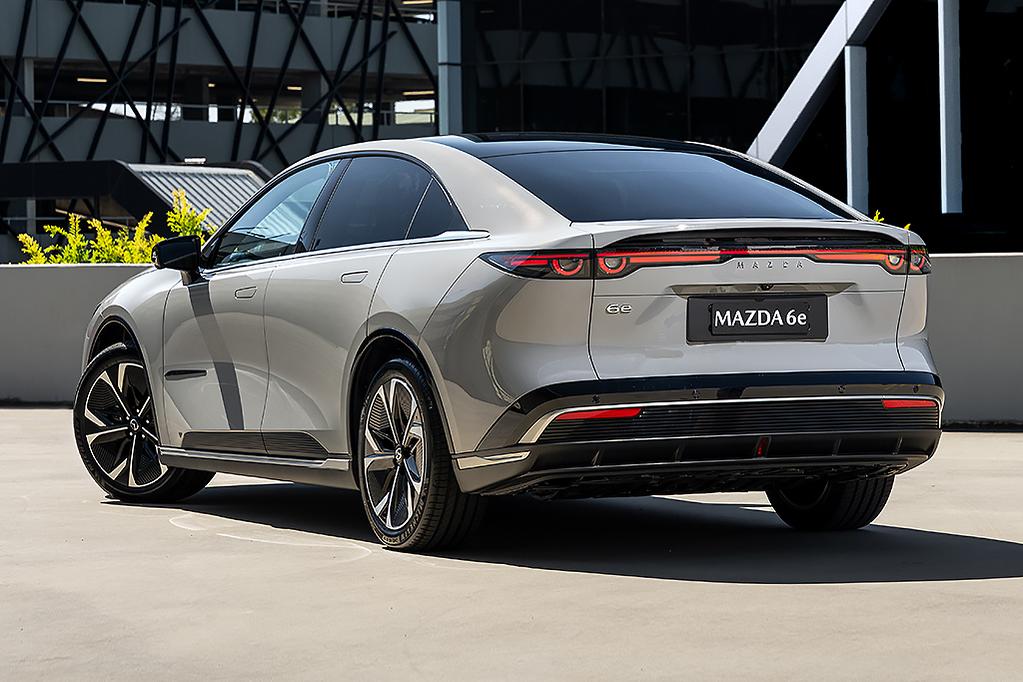
Now, Mazda is making its biggest move yet with the launch of the all-electric Mazda 6e.

Mazda’s Most Important EV So Far
The new Mazda 6e is not just another EV. It represents Mazda’s first serious attempt to compete in the mainstream electric vehicle market globally.
Priced from around AUD $49,990 before on-road costs in Australia, the Mazda 6e directly targets vehicles such as the Tesla Model 3 and BYD Seal.
Key highlights include:
- Rear-wheel drive layout
- 190kW electric motor
- 78kWh LFP battery
- Up to 560km WLTP driving range
- DC fast charging capability
- Premium interior and advanced technology features
More importantly, Mazda appears to understand that pricing is critical in the EV market. The 6e enters Australia at a surprisingly competitive price point compared with rivals from Tesla, Hyundai, and BYD.

The China Factor: A Huge Shift for Mazda
Perhaps the biggest story behind the Mazda 6e is not the car itself — but where the technology comes from.
The Mazda 6e was developed together with Chinese automaker Changan Automobile, based on the Deepal EV platform.
For decades, Japanese automakers led the world in engine and vehicle engineering. But in the EV era, China has become the global leader in battery manufacturing, EV software, charging technology, and supply chain efficiency.
Mazda appears to have recognised this reality earlier than some competitors.
Instead of spending years developing an expensive EV platform from scratch, Mazda partnered with Chinese EV specialists to accelerate its transition into electrification.
This strategy may upset traditionalists, but it could also save Mazda in the long run.

Australian Buyers Are Changing Fast
Australian consumers are also evolving quickly.
A few years ago, many drivers still worried about EV range, charging access, and reliability. Today, public charging networks are expanding rapidly, battery technology is improving, and EV ownership is becoming increasingly mainstream.
At iEV Australia, we are seeing growing demand for home EV chargers from customers who previously would never have considered an electric vehicle.
What is especially interesting is that many enquiries now come from loyal Japanese car owners — including Mazda drivers.
For many Australians, the Mazda 6e could become their “first EV without leaving the brand they trust.”
That may be Mazda’s biggest advantage.

Why Home Charging Matters More Than Ever
One thing is certain: the success of EV adoption in Australia will heavily depend on convenient home charging.
Most EV owners charge at home overnight rather than relying on public chargers daily.
Vehicles like the Mazda 6e support modern AC and DC charging standards, including CCS Type-2 charging compatibility.
IEV 22kW three-phase wall charger provides significant advantages:
- ⚡ Up to 3× faster charging compared with single-phase chargers
- 🏠 Ideal for homes with three-phase power
- 🏢 Perfect for businesses, fleets, and workplace charging
- 📈 Fully compatible with modern EVs including the Mazda 6e

Final Thoughts
The Mazda 6e may become one of the most important EV launches in Australia over the next few years.
Not because it is the fastest EV.
Not because it has the most advanced software.
But because it could persuade thousands of loyal Australian Mazda owners to finally make the switch to electric.
And if Mazda succeeds, it may prove something important:
In the EV era, brand trust still matters — but only if legacy automakers are willing to adapt fast enough.
At iEV, we not only provide top-quality EV chargers and accessories, but also deliver exciting and in-depth insights from the global EV market, handpicked by our founders every week.

Share:
What I Learned About EVs in Bangkok (No Pad Thai Required)
Ferrari Finally Goes Electric